
ECTC math instructor earns selective national fellowship
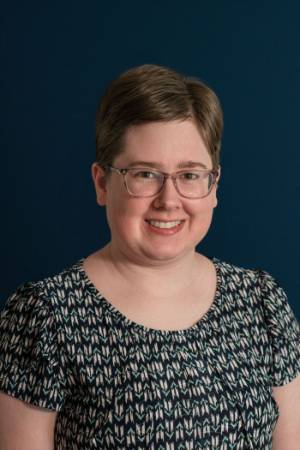 Elizabethtown Community and Technical College mathematics instructor Lisa Reed has
been named a fellow in a highly competitive national program that supports mathematics
faculty leadership and development. As a participant of the American Mathematical
Association of Two-Year Colleges Project Advancing Community College Careers: Education,
Scholarship, and Service Cohort 22, Reed looks forward to making a greater impact
for ECTC students.
Elizabethtown Community and Technical College mathematics instructor Lisa Reed has
been named a fellow in a highly competitive national program that supports mathematics
faculty leadership and development. As a participant of the American Mathematical
Association of Two-Year Colleges Project Advancing Community College Careers: Education,
Scholarship, and Service Cohort 22, Reed looks forward to making a greater impact
for ECTC students.
“Earning this spot in the ACCCESS cohort shows that my work in the classroom isn’t unnoticed,” Reed said. “I’d like to help my students feel more engaged in the classroom and improve student pass rates, so my hope is that participation will provide greater confidence and ability as a teacher and directly improve the learning environment for my students.”
Reed, who teaches algebra and calculus at the college, is one of around 30 faculty across the country who were selected. Participation in the two-year program, designed particularly for new faculty, includes attendance at national conferences for professional development and networking, and mentorship from other mathematics professors.
“Lisa Reed's selection as an AMATYC Project ACCCESS Fellow is a tremendous honor for both her and ECTC,” said ECTC Dean of Physical Sciences and Related Technologies Dr. Shawn Kellie. “In her first year at ECTC, Lisa has already demonstrated exceptional dedication to student success, instructional innovation and continuous improvement. This recognition reflects her talent and potential, while also highlighting the strength of our mathematics department and our college's commitment to excellence in teaching and learning.”
In addition to financial support for conference attendance, involvement in the cohort includes membership in AMATYC during the fellowship. Fellows also are expected to develop, implement and evaluate a project at their home institution.
“I love math and love talking about math, and I want to help others love it, too, or at least not be afraid of it,” Reed said. “My belief is that every person is capable of being a mathematician in their own way, and I look forward to developing a project of my own, through ACCCESS, that supports that view.”
